
Copper Foil Width
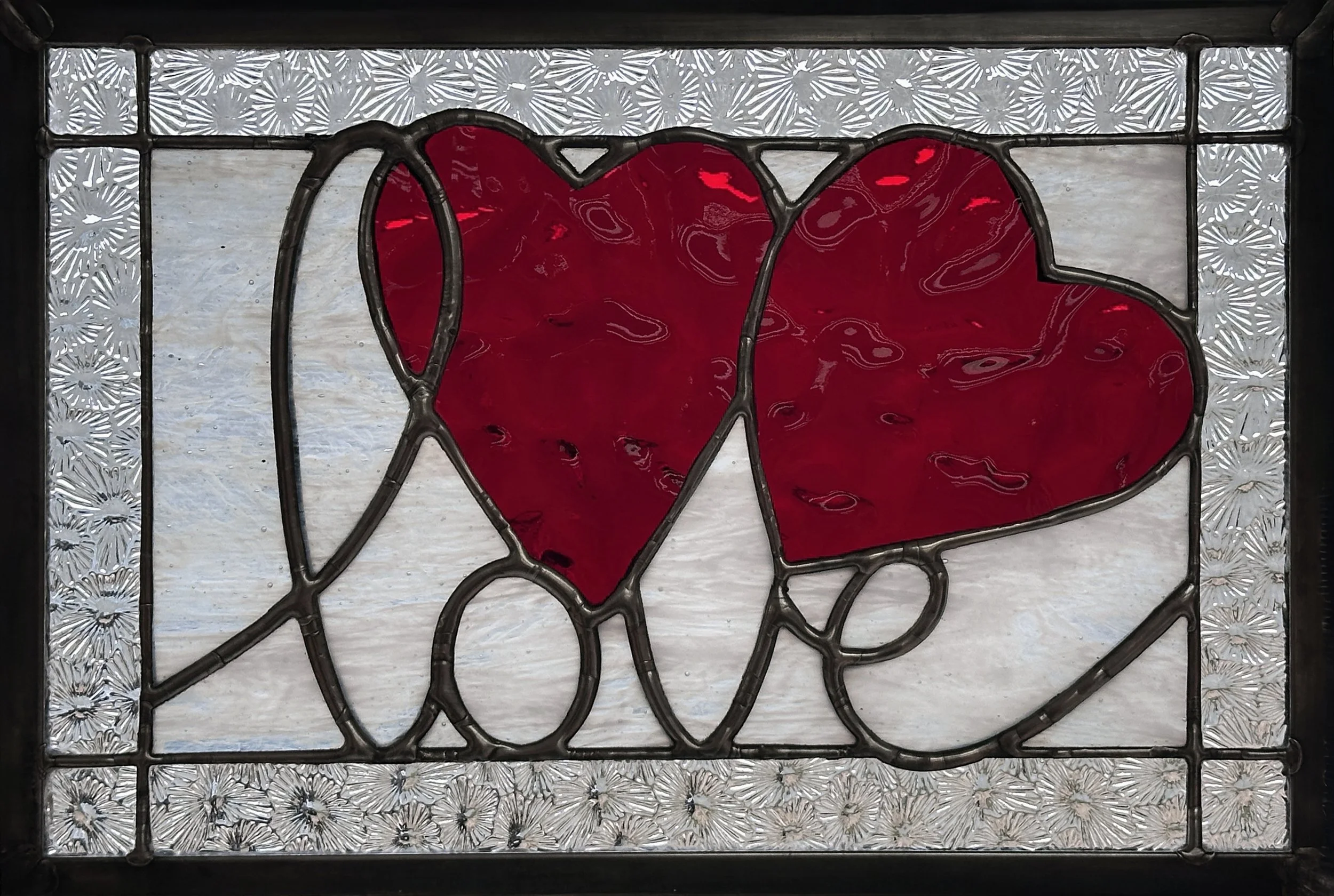
No, it’s not the most exciting subject—but it’s one worth revisiting from time to time. Here at Harmony Stained Glass, we reach for 7/32" foil at least 90% of the time, and it works beautifully for most of what we do. Every so often, though, it’s helpful to step back and consider how a wider or narrower foil might better support our design goals.
On this sweet little “Love” panel, David wanted to be sure the script stood out clearly, so he used 1/4" foil on the portions of the glass that make up the lettering. Mixing different foil widths on a single piece can be challenging, and this project was no exception, but with a bit of time and persistence he made it work. To create additional contrast in the solder lines—and to accommodate glass that was slightly thinner or smaller than usual—he used 3/16" foil in some areas, while sticking with the familiar 7/32" foil on the heavily textured glass of the hearts.
Mixing foil widths can also be effective when a design includes a large number of small, delicate pieces alongside more average-sized ones. Imagine a large butterfly with intricate details in the wings set against a background of sky and leaves. Using narrower foil on the smaller pieces helps preserve fine lines and prevents too much glass from being covered by solder.
On the other hand, some designs may benefit from wider foil to add visual weight to certain lines. For example, a floral design might feature a background divided into a grid pattern suggesting a garden trellis. This would be an ideal place to use wider foil—and therefore wider solder lines—to help the trellis stand out.
In stained glass work, solder lines are often just as much a part of the design as the glass itself. The next time you begin a project, take a moment to think about how adjusting your line widths could add that extra touch that elevates your work from lovely to truly extraordinary.
Interested in making “Two Hearts, One Love” for yourself? You can purchase the pattern for $5.00 from Kendra Kirk’s Etsy shop.